

Finding the ideal SUV means balancing cargo capacity, fuel economy, tech features, and budget. Nissan’s crossover lineup delivers options for every type of driver, but two models stand out as popular favorites: the Nissan Rogue and the Nissan Kicks. While both vehicles offer sleek design, comfortable seating, and advanced safety tech, they serve different lifestyles. Here is a direct comparison between the 2026 Nissan Rogue and 2026 Nissan Kicks to help you decide which crossover belongs in your driveway. 1. Size & Cargo Capacity: Compact vs. Subcompact The most significant distinction between the Rogue and the Kicks comes down to exterior dimensions and interior space. Nissan Rogue (Compact SUV): The Rogue offers a roomier cabin with up to 36.5 cubic feet of cargo space behind the second row and up to 74.1 cubic feet with the rear seats folded flat. It comfortably accommodates five adults with extra legroom, making it ideal for family road trips, grocery runs, and sports gear. Nissan Kicks (Subcompact SUV): Redesigned with a bolder, wider stance, the Kicks features up to 30 cubic feet of cargo space behind the rear seats (in FWD models) and up to 60 cubic feet max. It is agile and compact, making city driving, parallel parking, and garage storage effortlessly easy. 2. Performance & Capability Both SUVs deliver smooth handling, but their engines are tuned for different driving priorities. Nissan Rogue: Powered by a 1.5-liter VC-Turbo® 3-cylinder engine generating 201 horsepower and 225 lb-ft of torque. It provides quick acceleration for highway merging and passing power, along with available Intelligent All-Wheel Drive (AWD). Nissan Kicks: Features a 2.0-liter 4-cylinder engine pushing 141 horsepower and 140 lb-ft of torque. The Kicks also offers available Intelligent AWD with a dedicated Snow Mode -giving you confident traction during unpredictable Midwest winter weather. 3. Technology & Safety Features Nissan equips both crossovers with user-friendly digital displays and comprehensive driver-assist systems. Nissan Safety Shield® 360: Standard on both models, including Automatic Emergency Braking with Pedestrian Detection, Blind Spot Warning, Rear Cross Traffic Alert, and Lane Departure Warning. Infotainment & Connectivity: The Rogue offers an available 12.3-inch touchscreen with built-in Google services and wireless Apple CarPlay® / Android Auto™. The Kicks features an available 12.3-inch dual-screen setup, with top trims offering class-exclusive Bose® Personal Plus audio with speakers integrated right into the front seat headrests. ProPILOT Assist: The Rogue offers available ProPILOT Assist 2.1 for hands-off highway driving assistance on single-lane highways, while the Kicks offers standard ProPILOT Assist on higher trims. 2026 Nissan Rogue vs. 2026 Nissan Kicks Comparison Feature / Spec 2026 Nissan Rogue 2026 Nissan Kicks Vehicle Class Compact SUV Subcompact SUV Engine 1.5L VC-Turbo® 3-Cyl (201 hp) 2.0L 4-Cyl (141 hp) Drivetrain Front-Wheel Drive or Intelligent AWD Front-Wheel Drive or Intelligent AWD Max Cargo Volume Up to 74.1 cu. ft. Up to 60.0 cu. ft. (FWD) Available Display 12.3-inch Touchscreen w/ Google Built-In Dual 12.3-inch Displays Ideal Driver Families, highway commuters, extra cargo needs City drivers, budget-conscious buyers, commuters Which Nissan SUV Should You Choose? Choose a Nissan Rogue if: You need maximum passenger legroom, superior cargo volume for luggage or gear, and stronger turbocharged passing power for long highway drives. Choose a Nissan Kicks if: You want a nimble, stylish crossover that is easy to park, delivers excellent fuel economy, and offers available All-Wheel Drive at an accessible price point. Explore Your Options at Rolling Hills Nissan Whether you’re coming from St. Joseph, Savannah, Maryville, Cameron, or elsewhere in Northwest Missouri, Rolling Hills Nissan makes it easy to compare the 2026 Nissan Rogue and 2026 Nissan Kicks. As your trusted Missouri Nissan dealership, our team is here to help you navigate flexible Nissan financing, competitive Nissan lease deals, and exclusive inventory incentives. Visit Rolling Hills Nissan today to schedule a side-by-side test drive at our Nissan dealership in St. Joseph, MO!
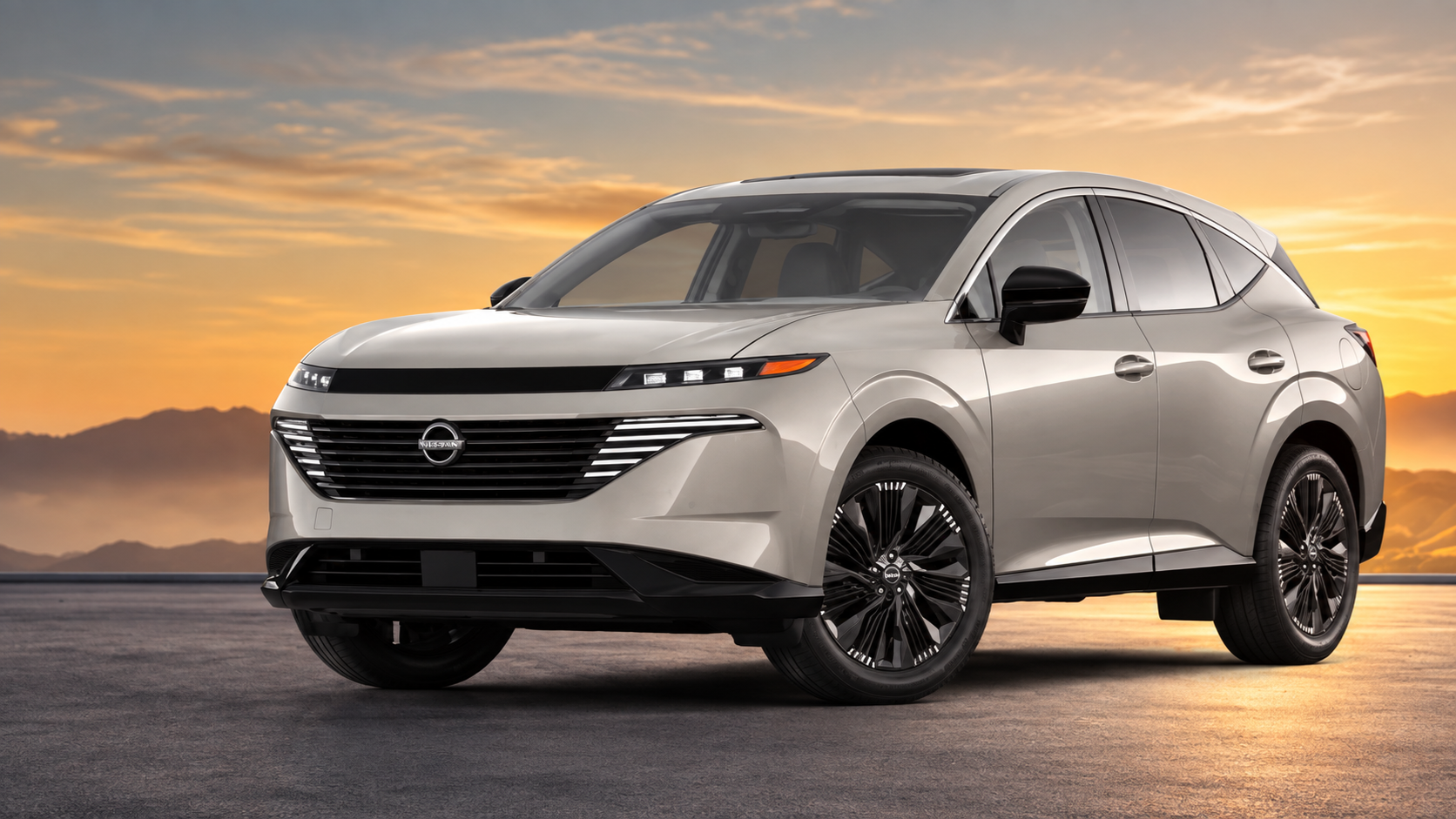
Which 2026 & 2027 Nissan Models Have AWD? Complete Buyer’s Guide
Midwest winters and unpredictable rainstorms demand a vehicle that keeps you confident on the road. Whether you're commuting down I-29 or tackling slick country roads, choosing a vehicle with all-wheel drive (AWD) delivers the extra traction and peace of mind you need. If you are shopping for a new vehicle, you might be asking: Which 2026 and 2027 Nissan models offer AWD? At Rolling Hills Nissan, your trusted Missouri Nissan dealership, we’ve compiled this definitive buyer’s guide to help you compare AWD sedans, crossovers, SUVs, and electric vehicles. How Does Nissan Intelligent AWD Work? Unlike traditional 4WD systems that remain engaged constantly (wasting fuel), Nissan Intelligent AWD continuously monitors road conditions, wheel slip, throttle position, and steering angle. Dry Pavement Efficiency: Under normal conditions, the system directs up to 100% of power to the front wheels to maximize fuel economy. Instant Traction: The moment slip is detected, power automatically splits up to 50/50 between front and rear wheels in milliseconds. Cornering Control: The system adjusts torque side-to-side to help pull you smoothly through sharp turns. For electric models like the Nissan Ariya, Nissan’s advanced e-4ORCE Dual-Motor AWD uses precise electric motor torque management to deliver near-instantaneous traction and smooth ride comfort. Complete 2026 & 2027 Nissan AWD Model Lineup Model Body Style AWD Availability Key Highlight Nissan Altima Midsize Sedan Available AWD confidence in a sleek, fuel-efficient commuter sedan Nissan Kicks Compact Crossover Available Compact agility with available AWD for all-weather driving Nissan Rogue Midsize Crossover Available Best-selling family crossover with terrain modes & Intelligent AWD Nissan Murano Midsize SUV Available Premium luxury, sculpted design, and confident standard/available AWD Nissan Pathfinder 3-Row SUV Intelligent 4WD 7-to-8 passenger seating with Drive & Terrain Mode Selector Nissan Ariya Electric Crossover Available e-4ORCE Dual-motor electric AWD delivering instant torque and control Nissan Armada Full-Size 3-Row SUV Intelligent 4WD Heavy-duty towing and full-frame 4WD performance Which Nissan AWD Model Fits Your Lifestyle? 1. Daily Commuters: Nissan Altima AWD If you prefer a classic sedan over an SUV but don't want to sacrifice winter capability, the Nissan Altima AWD is an ideal pick. It seamlessly balances up to 36 MPG highway with intelligent torque distribution when roads turn icy. 2. Family Adventurers: Nissan Rogue & Pathfinder AWD Nissan Rogue: The ultimate versatile midsize crossover featuring Eco, Sport, Snow, Off-Road, and Auto drive modes. Nissan Pathfinder: Need 3-row seating and serious towing capability? Pathfinder's Intelligent 4WD system with direct coupling responds instantly to wheel slippage before it even happens. 3. EV Enthusiasts: Nissan Ariya e-4ORCE Step into the future without giving up all-weather capability. The Ariya’s dual-motor e-4ORCE system controls power output and braking at each wheel individually, eliminating vehicle pitch during acceleration and braking. Explore Nissan AWD Models Near You Families and drivers from St. Joseph, Kansas City, Saxton, Dearborn, Cameron, Elwood, Savannah, and surrounding communities can explore Nissan AWD models to find the right combination of traction, comfort, and everyday versatility. Why Buy From Rolling Hills Nissan? When searching for a premier Nissan dealership in Northwest Missouri, local drivers trust Rolling Hills Nissan for: A vast selection of new 2026 & 2027 Nissan inventory. Competitive trade-in offers and flexible lease/financing specials. Certified Nissan technicians equipped to service your AWD powertrain. Ready to Test Drive an AWD Nissan? Don't wait for the next winter storm to upgrade your ride. Schedule a test drive today at your favorite Missouri Nissan dealership! Browse New Nissan AWD Inventory at Rolling Hills Nissan Get Pre-Approved for Financing Value Your Trade-In Online